Guide — Chapter 01
The Science
of freeze-drying.
Freeze-drying is a low-temperature preservation process. The food is first frozen, then placed under vacuum so its ice is removed by sublimation. A method designed to preserve its shape, colour, aroma and sensory qualities as closely as possible.
Chapter 02
Why do we want to preserve food?
Preserving food extends its availability, simplifies storage and limits waste, while preserving its qualities as closely as possible.
Less waste
Extending a food's usable life helps manage stock better and limits products being thrown away.
Seasonality
Enjoy fruits and vegetables harvested at their peak for much longer.
Quality
Preserve the shape, colour, aroma and sensory qualities of the product as closely as possible.
Transport
Greatly reduce water-related weight and make fragile products easier to transport.
Convenience
Obtain a light, stable product that's easy to store and ready to use.
Chapter 03
How does freeze-drying work?
The process relies on five controlled stages: preparation, freezing, vacuum, sublimation and stabilisation.
Step 01
Preparation
Ingredients are selected, cleaned and prepared in the desired form: whole, sliced or in pieces.
Step 02
Controlled freezing
The water in the food is turned into ice. Temperature and freezing speed are adapted to the product.
Step 03
Vacuum
The frozen food is placed in a chamber where pressure is greatly reduced.
Step 04
Sublimation
Through a controlled input of energy, the ice passes directly from solid to vapour, without becoming liquid.
Step 05
Stabilisation
Residual moisture is reduced before the product is protected in air- and moisture-tight packaging.
Chapter 04
The direct shift from ice to vapour.
Sublimation is at the heart of freeze-drying. Under reduced pressure, the ice leaves the food as vapour without passing through a liquid state.
As the ice crystals disappear, they leave behind a light, porous structure. This structure contributes to the crunch and makes rehydration easier if needed.
Chapter 05
What happens to the food?
Freeze-drying removes most of the water while generally preserving the product's shape. Weight, texture and storage conditions change significantly.
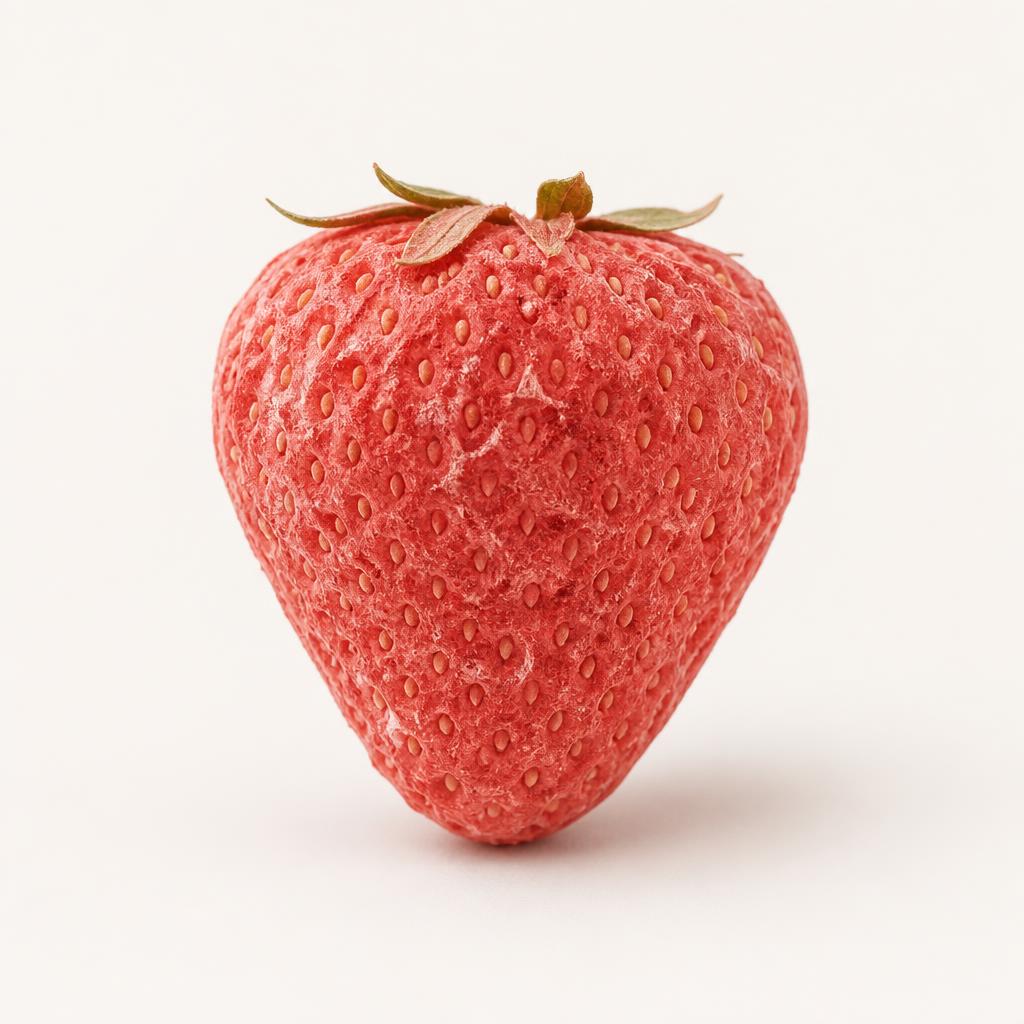
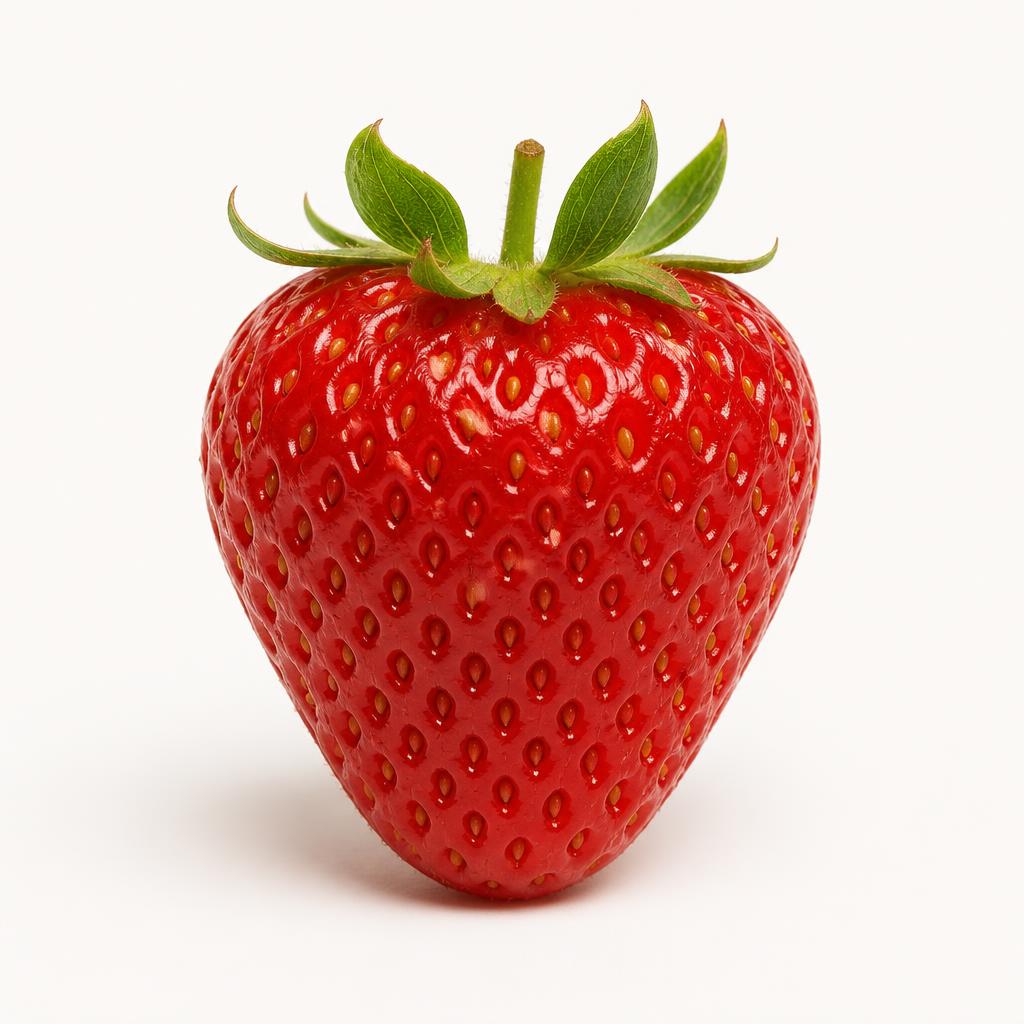
Drag to compare — same strawberry, same framing.
- WaterFresh ·Naturally high in waterFreeze-dried ·Very low residual content
- WeightFresh ·Original weightFreeze-dried ·Greatly reduced depending on the food
- ShapeFresh ·Soft or juicyFreeze-dried ·Shape generally well preserved
- TextureFresh ·Firm, tender or juicyFreeze-dried ·Light, porous and crunchy
- StorageFresh ·Short and often refrigeratedFreeze-dried ·Long shelf life in suitable packaging
- UseFresh ·Immediate consumptionFreeze-dried ·Snack, topping, cooking, mixology or rehydration
Results vary depending on the food, the freeze-drying cycle, the packaging and the storage conditions. Always check the best-before date shown on the product.
Chapter 06
Why is freeze-drying interesting?
Freeze-drying is one of the most effective methods for preserving a food's structure and sensory qualities. It produces a light, stable and versatile product.
Crunchy texture
Removing the water leaves a light, porous structure, without frying.
Preserved quality
Low temperatures help preserve colour, aroma and many sensitive compounds as closely as possible.
Long shelf life
Low water content slows down the reactions responsible for product spoilage.
Light weight
Removing the water makes food much lighter and easier to transport.
Versatility
To snack on, sprinkle, rehydrate or use in recipes.
Simple recipes
GREEN'CROQ products are developed without added preservatives or unnecessary additives.
Good to know
Freeze-drying requires more time and energy than conventional drying. The resulting product must also be kept protected from moisture once opened.
Chapter 07
Freeze-drying or dehydration: what's the difference?
Both processes remove water, but they use different conditions and do not produce the same texture.
| Criteria | Freeze-drying | Classic dehydration |
|---|---|---|
| Principle | Freezing, vacuum and sublimation | Hot air circulation |
| Product temperature | Low and controlled | Generally higher |
| Texture | Light, porous and crunchy | Soft, dense or chewy |
| Shape and colour | Generally better preserved | Changes often more visible |
| Rehydration | Fast thanks to the porous structure | Often slower |
| Time and cost | Longer and more demanding process | Generally simpler process |
Principle
Freeze-dryingFreezing, vacuum and sublimation
Classic dehydrationHot air circulation
Product temperature
Freeze-dryingLow and controlled
Classic dehydrationGenerally higher
Texture
Freeze-dryingLight, porous and crunchy
Classic dehydrationSoft, dense or chewy
Shape and colour
Freeze-dryingGenerally better preserved
Classic dehydrationChanges often more visible
Rehydration
Freeze-dryingFast thanks to the porous structure
Classic dehydrationOften slower
Time and cost
Freeze-dryingLonger and more demanding process
Classic dehydrationGenerally simpler process
No method is universally superior: the choice depends on the product, the intended use and the desired texture.
Chapter 08
Where is freeze-drying used?
From everyday snacking to space missions, freeze-drying is used whenever lightness, stability and product quality are essential.
Everyday snacking
Fruits, vegetables and mixes to snack on at the office, at school or on the go.
Breakfast
Mueslis, yoghurts, porridges, pastries and toppings.
Sport & hiking
Lightweight, portable products that are easy to carry.
Cocktails & mixology
Garnishes, decorations, powders and concentrated flavours.
Cooking & catering
Textures, plating, desserts and culinary creations.
Hospitality & events
Buffets, room service, welcome amenities and receptions.
Space exploration
Freeze-dried foods have been used in crewed space programmes since the 1960s.
Research & pharma
Freeze-drying also makes it possible to stabilise certain sensitive products and compounds.
Chapter 09
Frequently asked questions
Clear answers to the questions we hear most often.
Chapter 10 — Over to you
Ready to taste the difference?
Discover GREEN'CROQ freeze-dried fruits and vegetables, for your everyday moments as well as your professional uses.
Individuals
Coming soon in shops
Be the first to know the launch date of our range for individual customers.
Professionals
Discover our professional solutions
Tailored formats, signature blends, samples and dedicated support.